
-
Why glass matters: history and basics3 Topics
-
Where and how glass is used today3 Topics
-
State of glass waste and recycling3 Topics
-
Collection systems and actors3 Topics
-
Sorting, processing and making cullet3 Topics
-
Remelting, quality and markets3 Topics
-
Environmental, economic and policy aspects3 Topics
-
Practical implementation and teaching resources3 Topics
Participants 9



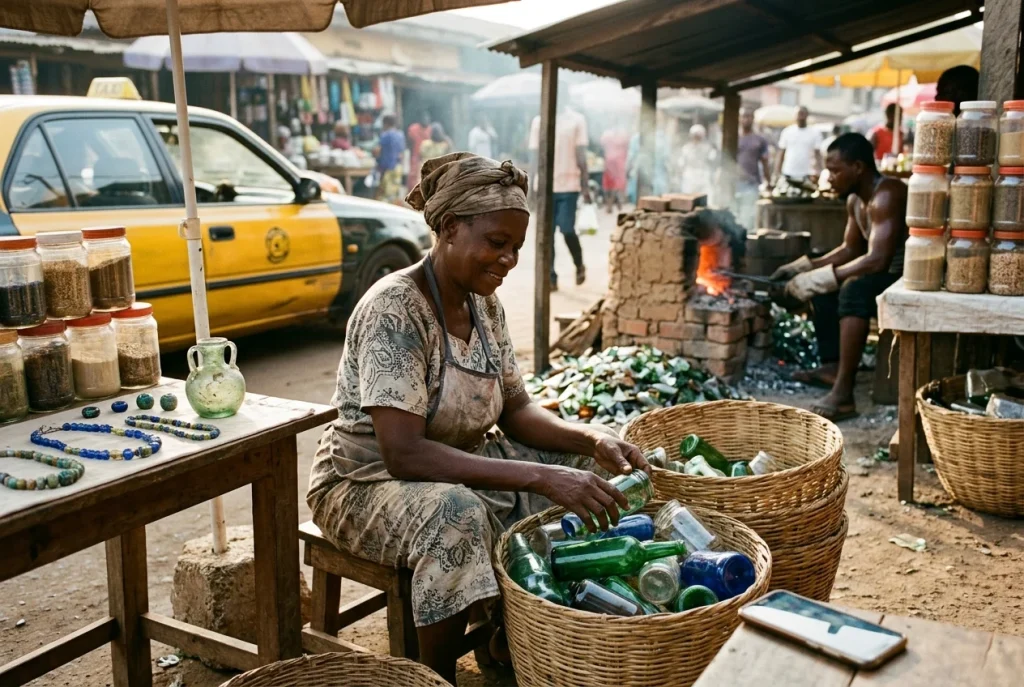
Glass is older than most of our technologies and, at the same time, part of everyday life: bottles on stall counters, windows in taxis, jars in kitchens, screens in phones. This lesson gives you a short, practical tour of why glass matters — from its long history to the basic material ideas you’ll need when working on glass recycling in the Global South.
We’ll keep things non‑technical and hands‑on. You’ll see how glass developed alongside human civilisation, why its properties make it a valuable resource to save and re‑use, and which simple definitions and terms matter when we talk about collection, sorting and remelting.
Why this matters here and now
- Glass is both durable and common. In many Global South settings there’s a thriving informal economy around collecting and selling bottles and jars — so recycling isn’t just about climate or waste targets, it’s about jobs, affordable materials and public health.
- Design, colour and how glass is handled over time affect whether it can be turned back into new containers. Knowing the basic history and material facts helps you design inclusive systems that work with, not against, local realities.
Quick historical snapshot (the short version)
- Early beginnings: People made simple glass objects (beads, small vessels) several thousand years ago in Mesopotamia, Egypt and the Near East.
- Spread and scale: Techniques spread to the Mediterranean and then worldwide. By the Roman era glass was used for containers and windows; later periods improved glassmaking and glassware.
- Industrial shift: From the 19th century onward, mechanisation (and later the glass‑blowing machine and float glass process) turned glass into a mass commodity for packaging, building and transport.
- Why this history matters for recyclers: mass production created today’s large streams of container and flat glass waste; historic designs and modern additives (colours, coatings, laminates) affect recyclability.
Simple material definitions you’ll use
- Glass (in everyday recycling): an amorphous (non‑crystalline) solid, most commonly soda‑lime‑silica glass for bottles and jars. It softens and flows when heated and becomes rigid when cooled.
- Cullet: broken or waste glass destined for remelting. It’s the basic feedstock for recycling.
- Container glass vs flat glass vs specialty glass:
- Container glass: bottles, jars — usually soda‑lime silica and widely recyclable.
- Flat glass: windows, solar panels, some architectural glass — often different composition and treatments.
- Specialty glass: borosilicate (cookware, lab glass), tempered/laminated (car windscreens or safety glass) — can contaminate recycling streams.
- Recovery rate: the share of post‑consumer glass collected from the waste stream.
- Cullet share: percentage of recycled glass (cullet) used in a new glass melt.
- Remelt: process of melting cullet (often mixed with virgin raw materials) to make new glass.
Economic and social importance (high level)
- Uses: Glass is essential for food and beverage packaging, construction (windows), transport (automotive glass), and electronics (screens). These markets create steady demand for cullet.
- Livelihoods: Collection, sorting and small‑scale processing provide income for many people in informal and formal sectors across the Global South.
- Circular value: Recycling glass keeps material value locally — cullet reduces raw material need, cuts energy use in furnaces and supports local manufacturing jobs.
- Inclusion opportunity: Well‑designed systems (bottle banks, deposit‑return or integrated collection with informal collectors) can improve recovery while protecting workers’ health and livelihoods.
What to expect next
You’ll now go deeper into three practical areas: the story of glass through time and why that history matters for recycling; the key material definitions and how different glass types affect sorting and remelting; and the economic and social roles glass plays in communities and markets. Keep an eye out for simple metrics (recovery rate, cullet share, remelt) — these are the tools you’ll use to design and measure better recycling in your context.