
-
Why glass matters: history and basics3 Topics
-
Where and how glass is used today3 Topics
-
State of glass waste and recycling3 Topics
-
Collection systems and actors3 Topics
-
Sorting, processing and making cullet3 Topics
-
Remelting, quality and markets3 Topics
-
Environmental, economic and policy aspects3 Topics
-
Practical implementation and teaching resources3 Topics
Participants 9


Sorting, processing and making cullet

travellingteacher256 April 13, 2026
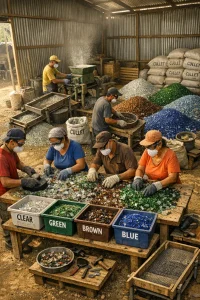
Welcome — this lesson is your practical, hands‑on guide to turning mixed glass waste into clean, ready‑to‑remelt cullet. We’ll walk step‑by‑step through the everyday processes used in small plants, municipal centres and community projects across the Global South: how to sort and separate by colour, how to crush and size glass into usable cullet, and how to spot and fix the common contamination problems that spoil batches and lower their value.
Why this matters
- Good sorting and a clean cullet stream are what make glass recycling viable: they protect furnace life, cut energy use and reduce the need for virgin raw materials.
- In low‑resource settings, simple improvements in sorting or removing a few key contaminants can make the difference between waste that can be remelted and waste that ends up in landfill.
- The work we cover is relevant to formal plants and to informal collectors and sorters — so it’s practical for community projects, school recycling drives and small-scale processors.
What you’ll be able to do after this lesson
- Explain why colour separation matters and choose simple methods for sorting by colour.
- Describe the basic crushing and screening steps to make cullet of the right size and cleanliness for remelting.
- Identify the main types of contamination (e.g., ceramics, stones, metals, organics, heat‑resistant glass) and apply low‑cost fixes or separation techniques.
- Use a few simple metrics (recovery rate, cullet share, contamination %) to gauge quality and improvement.
A few practical notes before we start
- Safety first: dust control, eye protection, gloves and sturdy footwear are essential when breaking or crushing glass. Keep first‑aid close by.
- Think local: adapt methods to what’s available — manual sorting tables, sieves, magnets and hand‑held grinders can work where automated kit is absent.
- Be inclusive: recognise and involve informal waste pickers — their knowledge and supply chains are often critical. Small improvements in sorting or incentives (e.g., better prices for clean colour streams) can raise incomes and recycling rates.
Ready? Let’s get into the hands‑on steps for sorting, processing and making cullet that’s fit for remelting.
Lesson Content
0% Complete
0/3 Steps