Introduction to Glass Recycling

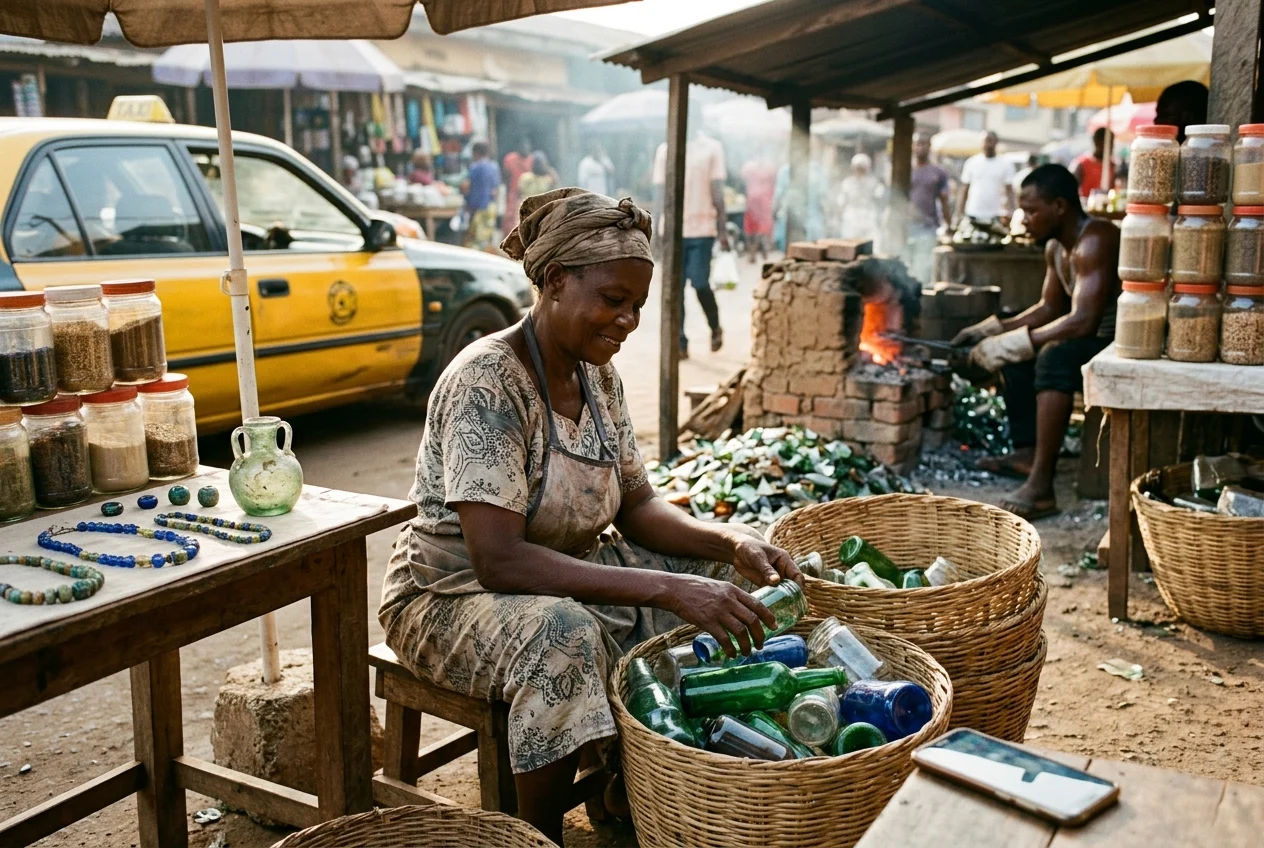
Welcome and well done for choosing to learn (or teach) about glass recycling. This short, practical course is built for educators and TVET/high‑school learners who want a clear, non‑technical guide to how glass moves from waste back into useful products and why that matters, especially in the Global South.
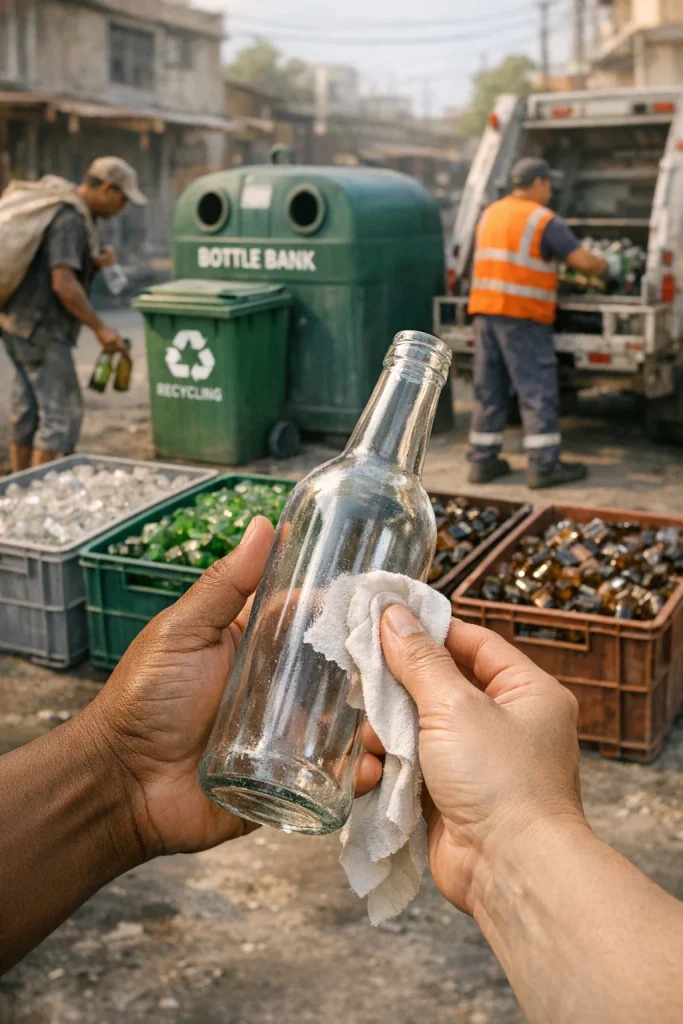
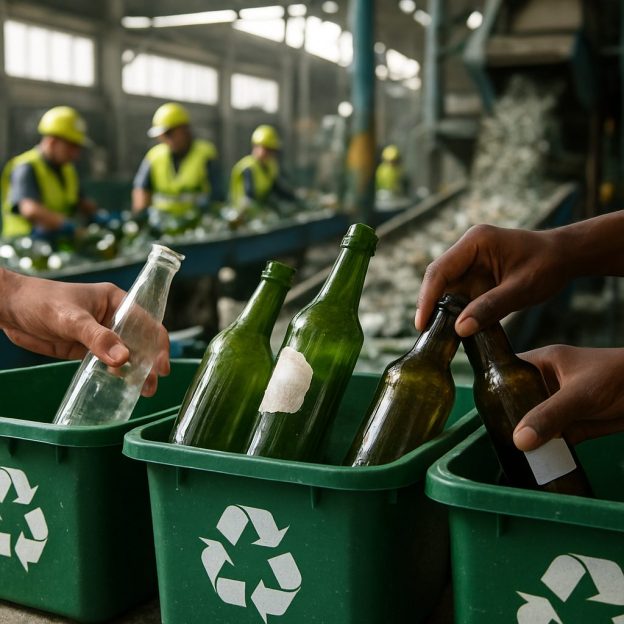
You’ll get straightforward, evidence‑based explanations of what glass recycling is, why it’s important, and how collection, sorting and remelting transform waste glass (cullet) into new containers and products. The course focuses on systems, simple metrics you can use locally (recovery rates, cullet share, energy savings) and inclusive practice that brings formal and informal actors into workable solutions.
Who this is for
- Teachers, TVET instructors and curriculum developers wanting classroom-ready material.
- High‑school learners and vocational trainees learning about waste management, materials or local enterprise.
- Community educators, waste coordinators and small-scale recyclers who need a practical, non‑technical reference.
What you’ll take away
- A clear picture of why glass matters culturally, economically and environmentally.
- How everyday collection and sorting turn mixed waste into marketable cullet.
- Simple metrics to measure performance and communicate impact (e.g. recovery rate, cullet share).
- Practical approaches to include both formal services and informal workers.
- Ready-to-use teaching activities and short, 1‑page summaries for classroom or community use.
How the course works
- Short, focused lessons with a mix of concepts, real‑world examples and simple tools.
- Practical activities: classroom exercises, a mini pilot design and checklist for local implementation.
- Evidence‑based resources: short reports and reviews you can consult for further reading.
- Non‑technical language throughout — aimed at making the subject usable in schools and training centres.
Why this matters in the Global South
Glass recycling delivers energy savings, reduces raw materials demand and supports jobs — including vital informal livelihoods. But systems, markets and access differ from place to place. This course emphasises approaches that work in resource‑constrained settings and that respect local economies and actors.
How to use these materials
Use the lessons as a short course, a teacher CPD module, or pick individual lessons as inserts into existing classes. Each lesson is designed to be flexible: run it in one session, split it across a week, or adapt activities for field visits and practical workshops.
Ready to get started? Head into the first lesson to explore the history, basics and why glass still matters today.
Course Content
About Instructor

 +6
enrolled
+6
enrolled
Course Includes
- 8 Lessons
- 24 Topics