
-
Why glass matters: history and basics3 Topics
-
Where and how glass is used today3 Topics
-
State of glass waste and recycling3 Topics
-
Collection systems and actors3 Topics
-
Sorting, processing and making cullet3 Topics
-
Remelting, quality and markets3 Topics
-
Environmental, economic and policy aspects3 Topics
-
Practical implementation and teaching resources3 Topics
Participants 9


Where and how glass is used today

travellingteacher256 April 13, 2026
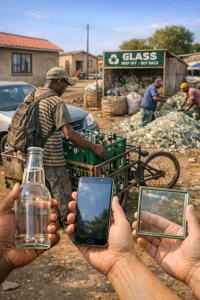
Introduction — Where and how glass is used today
Hi — welcome to this lesson. Glass is one of those everyday materials that quietly shapes how we live: what we drink from, how our homes keep the weather out, how cars and phones protect us and connect us. In the Global South, and right here in southern Africa, understanding where glass is used and why it matters is the first step to making recycling practical, fair and effective.
Why this lesson matters
- Knowing the main uses of glass helps you spot the types of waste that are worth collecting and recycling.
- The material benefits of glass explain why recycling brings real environmental and economic gains (not just nice talk).
- Seeing glass through a circular-economy lens shows how simple changes in design, collection and sorting can keep value in the system — and create jobs, including for the informal sector.
What you’ll learn (quick)
- To recognise the main modern applications of glass and why different uses matter for recycling.
- To explain the key material advantages that make glass a good candidate for closed‑loop recycling.
- To understand how glass fits into circular systems: from used bottle to cullet to new product — and where the practical bottlenecks are in the Global South.
How to use this lesson
- Read through the short topics and think of local examples (bottle types, windows, phone screens) you see every day.
- Look out for informal collectors, buy‑back points or drop‑off banks in your area — they’ll be important when we talk systems.
- Keep notes for a short class activity: map one local glass flow (e.g., beverage bottle → collection point → remelt) and list the main barriers you spot.
Ready? Let’s start by looking at where glass turns up in modern life and why those uses make it worth recycling.
Lesson Content
0% Complete
0/3 Steps