Participants 0


Foundations of Project-Based Learning for Lower Secondary

travellingteacher256 May 20, 2026
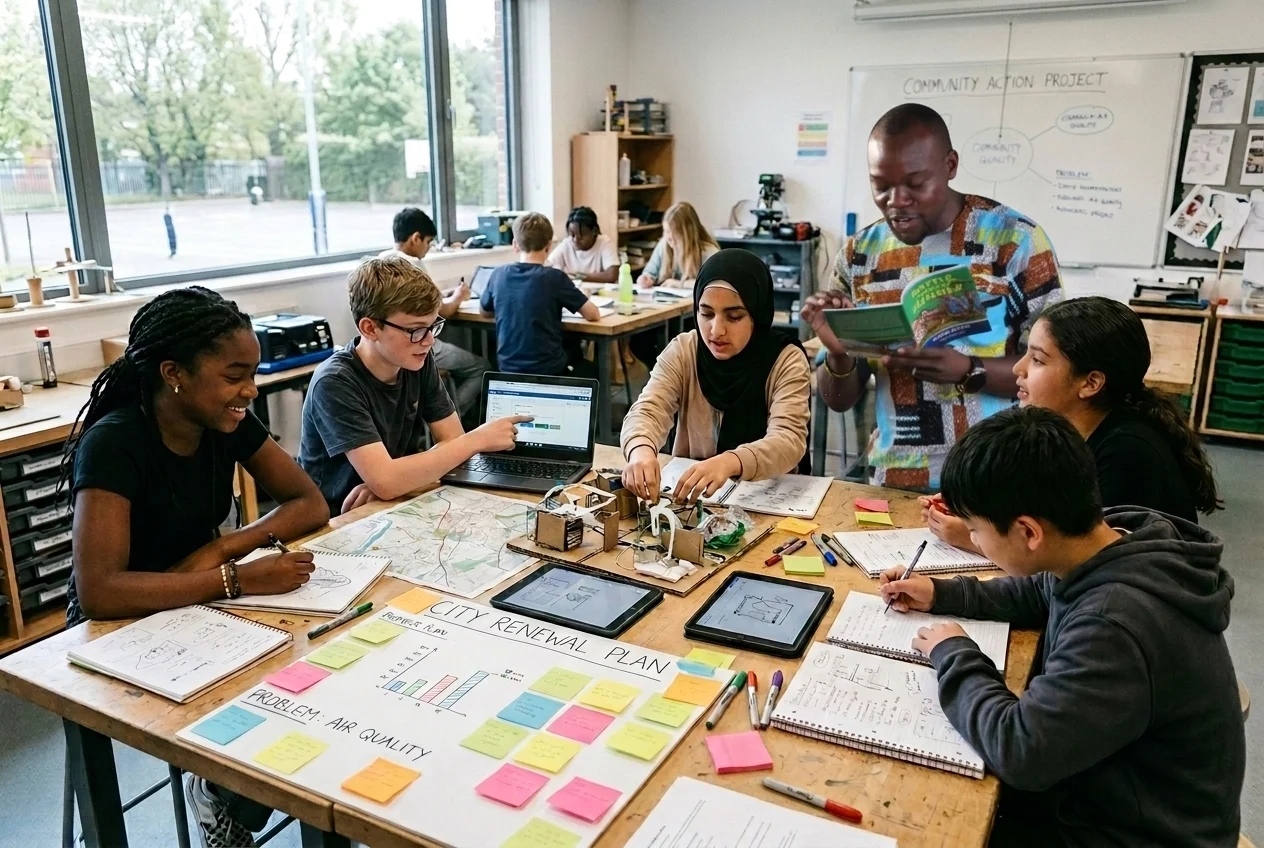
This lesson establishes the conceptual and practical foundations teachers need to design sustained project‑based learning (PBL) for Senior Phase (Senior 1–4). You will examine the core principles of PBL, the learning‑science and empirical evidence that support it, and the rationale for using sustained, learner‑centred projects with adolescents. Crucially, the lesson shows how well‑designed PBL can be made classroom‑ready by aligning projects with CAPS outcomes, creating authentic tasks that matter to learners, and embedding equity, inclusion and differentiation from the start.
Learning outcomes — by the end of this lesson you will be able to:
- Explain the core principles of PBL and how they differ from a conventional “doing a project” approach.
- Summarise key evidence from learning science that underpins sustained inquiry, collaboration, formative assessment and transfer of learning.
- Map a PBL unit to CAPS learning outcomes and assessment requirements for the Senior Phase.
- Draft a compelling, authentic driving question and design an associated task that connects to learners’ lived contexts.
- Identify practical strategies to ensure equity, inclusion and learner‑centredness (scaffolds, choices, roles, assessment accommodations).
What this lesson covers (brief):
- Core Principles of PBL: constructivist inquiry, sustained inquiry, learner voice and public products — and the teacher’s facilitative role.
- Evidence and Learning Science: why PBL supports deep understanding, transfer and the development of generic skills (critical thinking, collaboration, self‑management).
- Aligning PBL with CAPS: translating CAPS outcomes into driving questions, assessment standards and observable evidence of learning.
- Authentic Tasks and Real‑World Relevance: designing contexts, audiences and products that motivate adolescents and connect school to community.
- Equity, Inclusion and Learner‑Centredness: practical differentiation, assessment adjustments, group composition and learner choice so every learner can succeed.
How you will work in this lesson:
- Short, evidence‑informed readings and examples from PBL practice.
- A mapping activity to align a sample driving question to CAPS outcomes.
- A micro‑design task: draft a driving question, target outcomes and one assessment criterion.
- Reflective prompts to refine facilitation, scaffolding and inclusivity strategies.
Expect to leave with a clear rationale for PBL in the Senior Phase, a short classroom‑ready plan you can adapt, and concrete next steps for piloting a sustained project that aligns to CAPS and serves all learners.