

Topic 1: Discovering Strengths and Community Needs

travellingteacher256 July 28, 2026
Introduction
A business opportunity often starts with two simple questions:
- What am I good at?
- What does my community need?
When you can answer these questions honestly, you begin to see how your talent can become useful to other people. Skills are not only for personal success. Skills can solve problems, save time, improve quality of life, and create income.
This topic helps learners identify their strengths, interests, and abilities, and then compare them with real needs in their community. This is the first step towards turning talent into opportunity.
1. Understanding Strengths
A strength is something you can do well. It may be a skill you already have, a talent you were born with, or an ability you have developed through practice.
Strengths can include:
- Cooking
- Sewing
- Hairdressing
- Cleaning
- Farming
- Repairing items
- Teaching others
- Organising events
- Speaking clearly
- Helping people
- Creating crafts
- Using technology
- Selling products
- Good customer service
Some strengths are technical. Others are personal. For example:
- A person may be good at making soap.
- Another may be good at speaking to customers.
- Another may be able to organise stock and manage money.
All of these are valuable.
Key idea
A strength becomes more powerful when it solves a problem for someone else.
2. Talents, Interests, and Abilities
To discover opportunities, learners must look at three areas:
a) Talents
Talents are natural abilities that come easily to you.
Examples:
- Singing
- Drawing
- Working with children
- Fixing things
- Creativity
b) Interests
Interests are the things you enjoy doing and want to learn more about.
Examples:
- You enjoy baking
- You like fashion
- You are interested in tourism
- You like helping in the garden
- You enjoy using phones or computers
c) Abilities
Abilities are skills you can perform well, especially after learning or practising.
Examples:
- You can make beds neatly
- You can wash and iron clothes
- You can prepare meals
- You can calculate costs
- You can guide visitors
- You can handle customers politely
Why this matters
Sometimes people think only formal jobs count. That is not true. Many business ideas begin with what a person can already do well.
3. Looking at Community Needs
A community need is a problem, gap, or demand that affects people in your area. If you can meet that need, you may create a useful service or product.
Common community needs include:
- Clean water
- Affordable soap
- Bread and food
- School supplies
- Tailoring and repairs
- Childcare support
- Cleaning services
- Transport support
- Tourist products
- Accommodation services
- Farming inputs
- Digital help
- Event planning
Think about who needs help
Different groups need different solutions:
- Families may need food, cleaning, clothes, or childcare.
- Schools may need exercise books, uniforms, lunch, soap, or repairs.
- Hotels and lodges may need cleaning services, laundry, food supply, or crafts.
- Shops may need stock, packaging, or support services.
- Tourists may need guides, crafts, transport, or hospitality.
4. Matching Strengths to Needs
The real opportunity appears when your strength meets a need.
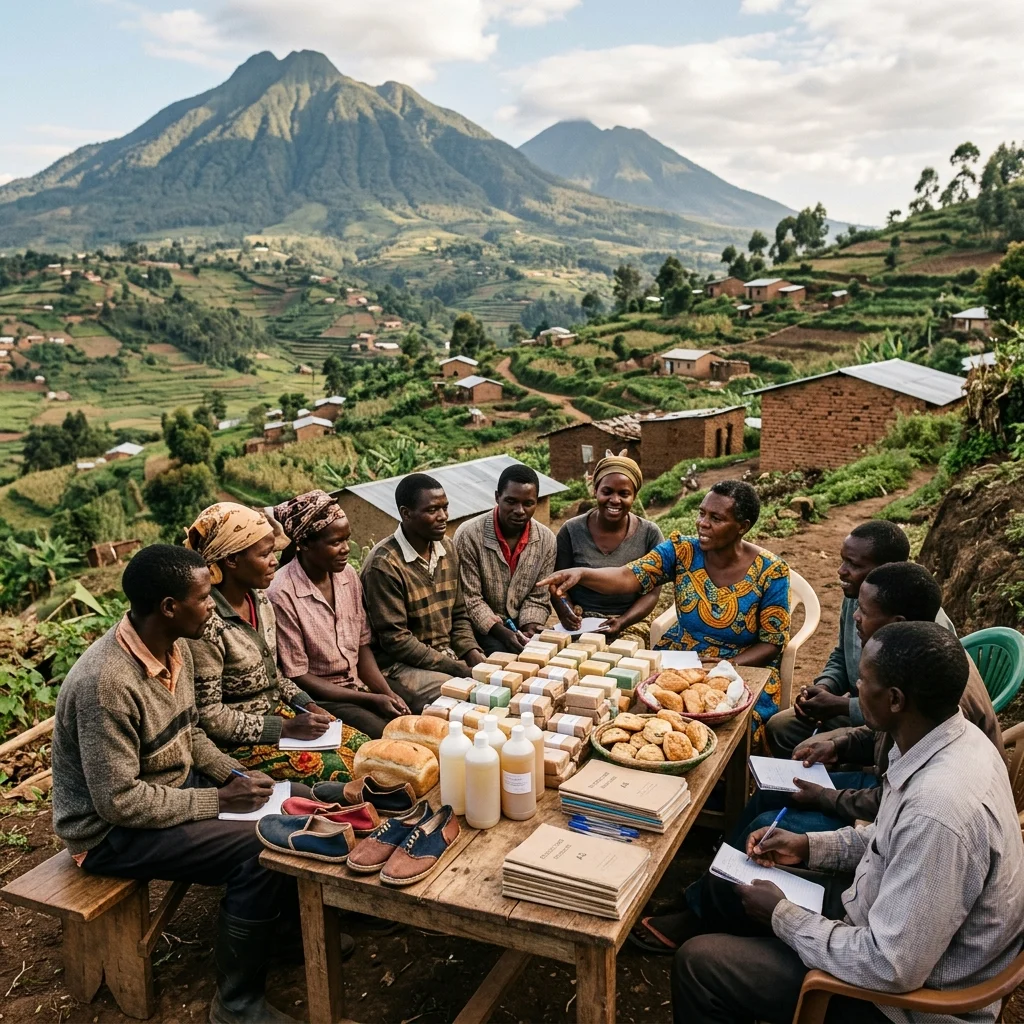
Example 1: Soap making
- Strength: You can make soap
- Need: Schools, homes, and hotels need hygiene products
- Opportunity: Make and supply soap to local clients
Example 2: Bread making
- Strength: You can bake well
- Need: Families need affordable bread every day
- Opportunity: Start a small baking business
Example 3: Craft making
- Strength: You are creative and make beautiful crafts
- Need: Tourists want souvenirs
- Opportunity: Sell crafts to lodges, curio shops, and visitors
Example 4: Sewing
- Strength: You can sew clothes or repair uniforms
- Need: Learners and families need uniforms and alterations
- Opportunity: Offer tailoring services
Example 5: Cleaning and laundry
- Strength: You are hardworking and organised
- Need: Hotels and households need clean spaces and clean linen
- Opportunity: Provide cleaning or laundry services
Main lesson
A useful skill is not just something you know. It is something people are willing to pay for because it solves a real problem.
5. How to Identify Your Strengths
Learners should reflect honestly on what they can do.
Use these questions:
- What do people often ask me for help with?
- What tasks do I do better than others?
- What do I enjoy doing?
- What have I learned from home, school, work, or church?
- What skill do I want to improve?
- What do others say I do well?
Activity: My Strengths List
Write down at least five strengths.
Example:
- I am good at cooking
- I speak well with customers
- I can clean carefully
- I am creative
- I learn quickly
Important reminder
Do not underestimate simple skills. Small skills can grow into strong businesses.
6. How to Identify Community Needs
To find opportunities, learners must observe the community carefully.
Look around and ask:
- What do people complain about?
- What services are missing?
- What products are difficult to find?
- What do families buy often?
- What do schools need regularly?
- What do hotels and lodges use every day?
- What do tourists look for?
Signs of a business opportunity
A need may be a business opportunity if:
- People ask for it often
- It is needed regularly
- People are already paying for it somewhere else
- The current service is too far, too expensive, or poor quality
- You can offer a better or more convenient solution
Example
If people in your area travel far to buy soap, that is a sign that local soap production may be useful.
7. Community Clients
A community client is anyone in your local area who may buy your product or service.
Examples of community clients include:
- Families
- Teachers
- Learners
- Hotels
- Guesthouses
- Shops
- Churches
- Farmers
- Tourists
- Local offices
- Market traders
Why this matters
When you know your client, you can shape your product to meet their needs.
Ask:
- What do they need?
- How much can they afford?
- What quality do they expect?
- How often do they need it?
- How can I reach them?
8. The Strength-to-Opportunity Mindset
Successful people do not wait for perfect conditions. They look at what they have and begin there.
Instead of thinking:
- “I have nothing”
- “My skill is too small”
- “I am not ready”
- “Only big businesses succeed”
Think:
- “What can I do well?”
- “Who needs this skill?”
- “How can I start small?”
- “What problem can I solve now?”
This mindset helps learners move from passive thinking to action.
9. Simple Framework for Discovery
Use this simple method:
Step 1: List your strengths
Write down your talents, interests, and abilities.
Step 2: List community needs
Write down the problems or needs you see around you.
Step 3: Find the match
Ask: Which of my strengths can solve one of these needs?
Step 4: Choose one opportunity
Start with one realistic idea.
Step 5: Test it
Speak to potential customers and find out if they would buy it.
10. Example of Strength and Need Matching
| Strength | Community Need | Possible Opportunity |
|---|---|---|
| Cooking | Families and workers need affordable meals | Small food business |
| Sewing | People need repairs and uniforms | Tailoring service |
| Hairdressing | People want neat hair at reasonable prices | Home hair salon |
| Cleaning | Hotels need tidy rooms and linen | Cleaning service |
| Craft making | Tourists need souvenirs | Handmade craft sales |
| Farming | Households need fresh vegetables | Vegetable supply business |
| Teaching | Children need extra support | Tutoring service |
| Phone use | People need help with online forms | Digital assistance service |
11. Reflection Questions
Ask learners to think deeply about their own situation:
- What am I naturally good at?
- What skills have I learned from home, school, or work?
- Which skill do I enjoy most?
- What does my community need every day?
- Which need can I help solve?
- Who would pay for this service or product?
12. Activity: My Strengths and Opportunities
Instructions
Draw two columns on paper:
Column 1: My strengths
Column 2: Community needs
Then complete the list.
Example:
| My Strengths | Community Needs |
|---|---|
| I can cook | Families need meals |
| I can sew | Schools need uniforms |
| I can clean | Hotels need cleaners |
| I am creative | Tourists need crafts |
| I can speak well | Customers need friendly service |
Now circle one matching idea that you could start exploring.
13. Key Takeaways
- Everyone has strengths.
- Strengths can become income-generating opportunities.
- Community needs create demand.
- A good business solves a real problem.
- The best opportunities often start small and local.
- Your value increases when your skill serves others.
14. Conclusion
Discovering strengths and community needs is the foundation of entrepreneurship. It helps learners stop waiting and start noticing. When you understand what you can do and what people need, you begin to see practical ways to create value.
A skill becomes powerful when it meets a need. That is how talent turns into opportunity.